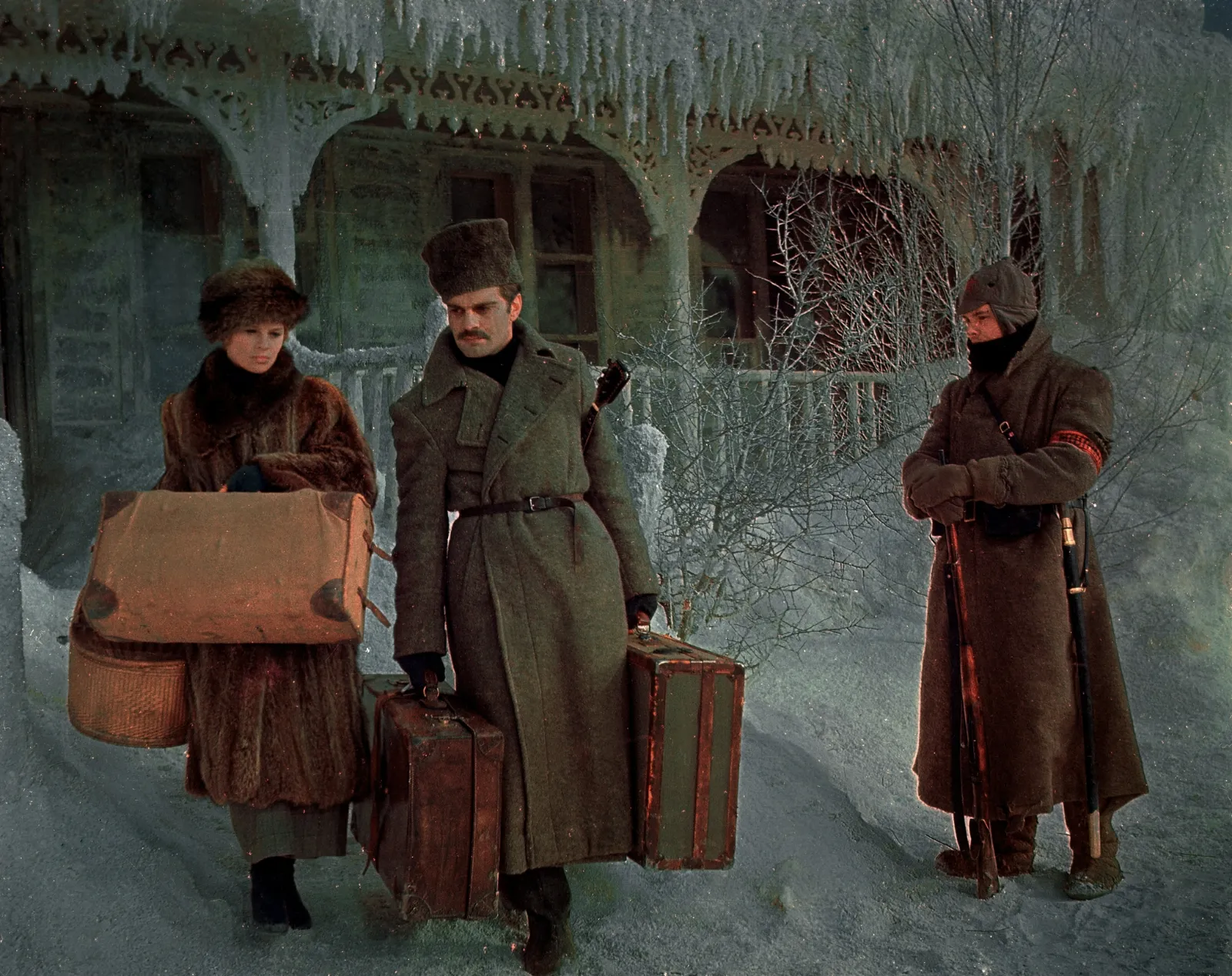
Sixty years since the filming of the movie Doctor Zhivago at what was then Delicias Station, now home to the Railway Museum.
The exhibition is titled “Zhivago Station.”
The Railway Museum once again becomes a witness to world history, celebrating the filming of Doctor Zhivago at the old Delicias Station in Madrid exactly 60 years ago, with a large-format photographic exhibition from July 9 to October 28 dedicated to the film Doctor Zhivago.
The exhibit, which pays tribute to the movie that transformed Delicias into a Moscow station in the summer of 1965, features photographs, images, promotional materials, and newspaper clippings from the era. But the real star is the station itself. The charm of spaces like this—halfway between functionality and nostalgia—is amplified by the skillful preservation and arrangement of materials designed precisely to inspire daydreaming. Visitors can run their hands along the sides of a Porter steam locomotive purchased in 1877, view and touch hand-powered wagons, or admire the evolution of railway engineering in the American diesel-electric locomotive Marilyn, which arrived in Spain for testing in 1954.
We will also be able to see the 1862 steam locomotive La Tardienta, the oldest steam locomotive in the Madrid Railway Museum’s collection, along with images of such beloved actors and actresses as Omar Sharif, Julie Christie, and Geraldine Chaplin, who stirred so many emotions in us with this historic film shot entirely in Spain.
It is striking that one of the most dazzling plot turns in history features a train as its protagonist. The film Doctor Zhivago, directed by David Lean and based on Boris Pasternak’s novel, depicts the moment when the communist utopia—that phantom long haunting Europe—takes shape in a specific country: Tsarist Russia. Halfway through its lengthy runtime, the protagonists must abandon their comfortable bourgeois life in Moscow and flee to the depths of the country, somewhere in the Urals, toward the unknown.
Perhaps the most breathtaking scene is the one in which they wait, swallowed by a desperate crowd, at Moscow’s central station. The travelers are dressed in the heavy winter clothing demanded by Russia—and above all, by the Siberian cold that awaits them. In reality, however, the temperature was over 30 degrees Celsius. The director would shout “Cut!” and the station would revert to being Delicias, in the heart of Madrid. It was July 1965.
These days, during the exhibition, Delicias Station—with its inseparable Railway Museum—is irresistibly and wonderfully steeped in the magic of Doctor Zhivago: from the very entrance, the film’s magnificent score imposes itself, splendid from beginning to end… and absolutely sublime when that unmistakable balalaika melody plays, transporting us to the most moving moments of the film.